The best AI models for coding right now are led by Claude Opus 5, which averaged 8.27 out of 10 across 50 one-shot builds on my GoldieBench leaderboard.
GPT-5.6 Sol is a close second at 8.16, and Qwen 3.8 and Claude Fable 5 tie for third at 8.10.
If you are happy to use a panel of models instead of one, OpenRouter Fusion beats all of them at 8.59.
That is the answer, and the full ranked list is right below.
I built this list because I kept getting the same question from people in my community.
They wanted to know which model they should actually pay for, and they were sick of rankings that came from three prompts and a gut feeling.
Every score here comes from the same 50 build tasks, run the same way, and published on GoldieBench where you can open the actual builds yourself.
Top 3 Picks At A Glance
- 🥇 Claude Opus 5 is the best single AI model for coding, with an 8.27 average and 13 gold medals.
- 🥈 GPT-5.6 Sol is the best pick for game prototypes, with an 8.16 average and the stronger game scores.
- 🥉 Qwen 3.8 is the surprise package, with an 8.10 average and 8 gold medals, although it is only available inside Qoder right now.
If budget matters most, jump straight to MiniMax M3 at number six, because it gets close to the top tier for a fraction of the price.
How I Ranked The Best AI Models For Coding
I kept the method simple so you can check it yourself.
- Same tasks for everyone. Every model got the same 50 one-shot build briefs, which cover 23 games, 12 simulations, 9 visual pieces, 3 web pages and 3 other builds.
- One shot, no rescue. Each model had one prompt to produce a working build, and nobody fixed the code afterwards.
- Scored on the result. Each build was scored out of 10 from what it actually rendered, with written notes on what worked and what broke.
- Enough coverage to count. I only ranked models with at least 20 scored builds and no provisional flag, so nobody climbs the list on a lucky handful of tasks.
I also split out the multi-model panels like Fusion into their own section, because comparing a panel to a single model is not a fair fight.
The 10 Best AI Models For Coding
1. Claude Opus 5 (Anthropic): 8.27 Average
Claude Opus 5 is the most reliable all-rounder I have tested on the bench.
It scored all 50 tasks and took 13 gold medals, which means it produced the best build on the whole board 13 times.
It is especially strong on simulations, where it averaged 8.63, and on visual builds, where it averaged 8.52.
Its weak spot is that it sometimes builds an impressive project that drifts away from the brief, so be specific in your prompts.
Best for: hard agentic builds, physics and shader work, and whole-repo reasoning with its 1M-token context.
Price: listed at $5 per million input tokens and $25 per million output tokens.
See Claude Opus 5 on GoldieBench →
2. GPT-5.6 Sol (OpenAI): 8.16 Average
GPT-5.6 Sol is OpenAI's flagship and the most consistent model near the top of the board.
It only took 2 golds, but it collected 9 silvers and 10 bronzes across all 50 tasks.
It averaged 8.17 on the 23 game tasks, which beats Opus 5 on games.
I go through every round of that fight in my Claude Opus 5 vs GPT-5.6 verdict, including the builds where each one collapsed.
Best for: one-shot game prototypes and teams who want cheaper Luna and Terra tiers in the same family.
Price: listed at $5 in and $30 out per million tokens for Sol, with Luna at $1/$6 and Terra at $2.50/$15.
See GPT-5.6 Sol on GoldieBench →
3. Qwen 3.8 (Alibaba): 8.10 Average
Qwen 3.8 is the result that surprised me most on this list.
It scored 45 tasks and took 8 gold medals, which is more golds than GPT-5.6 Sol and Claude Fable 5.
It runs as a real agentic coder that writes and iterates on files rather than just answering in chat.
The catch is access, because GoldieBench lists it as available only inside Qoder, with no public API to route into your own apps.
Best for: one-shot 3D worlds and anyone already working inside the Qoder IDE or CLI.
Price: listed as available on the Qoder plan.
4. Claude Fable 5 (Anthropic): 8.10 Average
Claude Fable 5 ties Qwen 3.8 on average but sits below it on gold medals, with 4 golds across 47 scored tasks.
GoldieBench lists shader and GPU physics work as its superpower, with strong scores on the path tracer, black hole and outrun builds.
It is the most expensive model on this list, so I only reach for it when the plan matters more than the price.
Best for: plan-heavy, multi-step builds where reasoning depth matters most.
Price: listed at $10 per million input tokens and $50 per million output tokens.
See Claude Fable 5 on GoldieBench →
5. Grok (xAI): 8.09 Average
Grok is the X-native model, and it scored 43 builds with an 8.09 average.
Its best single build on the bench was the Twilight Vale open-world RPG, which scored 9.5 and took gold.
It averaged 8.34 on its scored game tasks, which is higher than both Opus 5 and GPT-5.6 on that category.
The downside is that access runs through an X Premium subscription, which is awkward if you want to plug it into a backend agent loop.
Best for: game builds and workflows that benefit from live X context.
Price: listed as a subscription via X Premium.
6. MiniMax M3 (MiniMax): 7.97 Average
MiniMax M3 is the best value model on this list by a long way.
It averaged 7.97 across 47 builds, which is only 0.30 behind Opus 5, and its best build was a gold-medal Dragon Realm game that scored 9.0.
It has a 1M-token context window, so it can take a whole repo in one call.
I have been running it inside my own agent stack, and you can see that setup in this video.
Best for: high-volume agent loops where the cost per call decides everything.
Price: listed at $0.30 per million input tokens and $1.50 per million output tokens.
See MiniMax M3 on GoldieBench →
🔥 Want to know which of these models I use for which job? Inside the AI Profit Boardroom, I share the exact routing I use between the flagship models and the cheap ones, with step-by-step video tutorials, weekly coaching calls and 3,400+ members testing new models the week they land. → Get access here
7. Kimi K3 (Moonshot AI): 7.89 Average
Kimi K3 scored all 50 tasks and took 8 gold medals, which ties it with Qwen 3.8 for golds.
It is built for long-horizon agent work, and GoldieBench verified its 1M-token context with exact recall from 162k tokens of noise.
The trade-off is speed, because some of its single builds took more than 13 minutes.
Best for: long agent runs, whole-repo context work and terminal-driving agents.
Price: listed at $3 per million input tokens, and included in the Kimi coding plan.
8. GLM-5.2 (Zhipu / Z.ai): 7.77 Average
GLM-5.2 is the highest-scoring open-weights model in this ranking.
It averaged 7.77 across 47 builds and took 5 gold medals, with its best result a 9.0 on the fluid simulation.
Because the weights are open, you can run it yourself with no token meter and no vendor lock-in.
Best for: anyone who wants a frontier-level coder they can self-host, plus long-context work with its 1M-token window.
Price: listed as open weights and free for individuals, with separate licensing for commercial use.
9. Claude Opus 5.5 (Anthropic): 7.57 Average
Claude Opus 5.5 is newer than Opus 5, and it still scored lower at 7.57 across 50 builds.
That is the best lesson on this whole list, because newer does not automatically mean better on your tasks.
Its strength is reliability, because GoldieBench reports that all 50 builds rendered with zero console errors and all 23 games passed the input playtest.
Best for: builds where clean, error-free output matters more than peak visual quality.
Price: listed at $4 per million input tokens and $20 per million output tokens.
See Claude Opus 5.5 on GoldieBench →
10. Muse Spark 1.2 (Meta): 7.55 Average
Muse Spark 1.2 rounds out the top 10 with a 7.55 average across all 50 builds.
It is fast, with most builds landing in 45 to 80 seconds, and it is strong on generative art and app-shell builds.
Its weakness is 3D game worlds, where several builds rendered black or empty.
Best for: generative-art visuals, dashboards and app-shell one-shots.
Price: listed at $1.25 per million input tokens and $4.25 per million output tokens.
See Muse Spark 1.2 on GoldieBench →
The Panel Picks That Beat Single Models
Here is the twist that changes how I think about the best AI models for coding.
The highest score on the entire board does not come from a single model.
OpenRouter Fusion averaged 8.59 across 47 builds and took 21 gold medals, which is more than any single model by a wide margin.
It sends one prompt to a panel of frontier models and merges the answers into one.
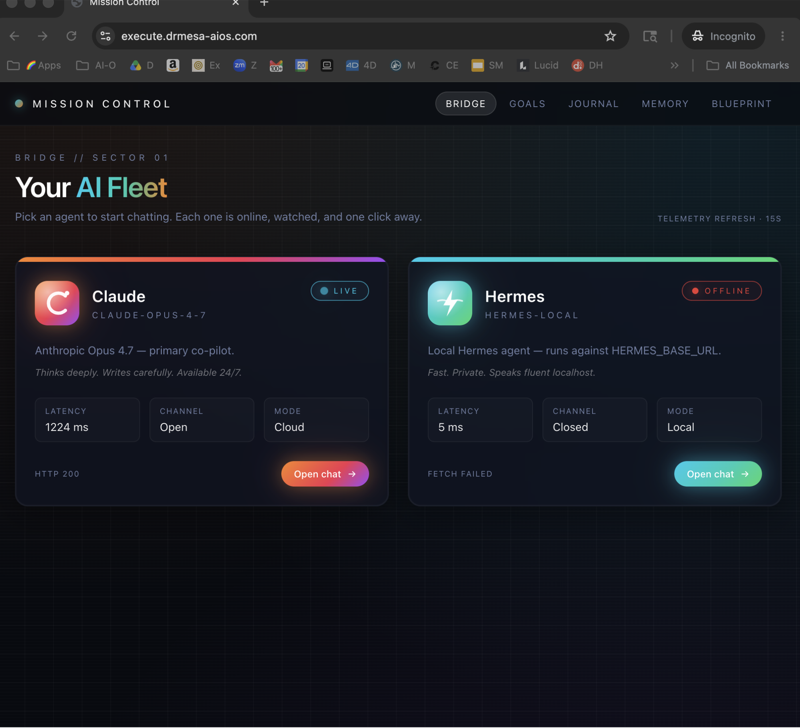
Hermes MoA, which is a Mixture of Agents panel with a chair model that merges the drafts, averaged 8.17.
Sakana Fugu Ultra takes the same panel idea from a different vendor, and it averaged 7.94 across 42 builds.
The catch with panels is latency, because the slowest model in the panel decides how long you wait.
So I use panels for high-stakes single prompts and single models for everything else.
You can see each one on the Fusion page, the Hermes MoA page and the Fugu Ultra page on GoldieBench.
The Best AI Models For Coding Compared At A Glance
| Rank | Model | Average score | Scored builds | Gold medals | Listed price | Best for |
|---|---|---|---|---|---|---|
| 1 | Claude Opus 5 | 8.27 | 50 | 13 | $5 in / $25 out per M | It is the best all-rounder for hard builds. |
| 2 | GPT-5.6 Sol | 8.16 | 50 | 2 | $5 in / $30 out per M | It is the safest pick for game prototypes. |
| 3 | Qwen 3.8 | 8.10 | 45 | 8 | Qoder plan | It suits people already using Qoder. |
| 4 | Claude Fable 5 | 8.10 | 47 | 4 | $10 in / $50 out per M | It suits plan-heavy reasoning work. |
| 5 | Grok | 8.09 | 43 | 5 | X Premium subscription | It suits game builds with live X context. |
| 6 | MiniMax M3 | 7.97 | 47 | 2 | $0.30 in / $1.50 out per M | It is the best value for volume. |
| 7 | Kimi K3 | 7.89 | 50 | 8 | $3 in per M | It suits long agent runs. |
| 8 | GLM-5.2 | 7.77 | 47 | 5 | Free open weights for individuals | It is the best self-hosted option. |
| 9 | Claude Opus 5.5 | 7.57 | 50 | 0 | $4 in / $20 out per M | It suits error-free, clean builds. |
| 10 | Muse Spark 1.2 | 7.55 | 50 | 0 | $1.25 in / $4.25 out per M | It suits fast visual one-shots. |
Why You Can Trust This Ranking
I do not rank these models from memory or from launch-day press releases.
Every score in this post comes straight from the GoldieBench data, and every build behind the scores is public.
You can open the GoldieBench leaderboard and play the games, run the simulations and read the written verdicts yourself.
I also publish the weak builds, not just the wins, which is why you can see Opus 5 drifting off-brief and GPT-5.6 rendering a black voxel island.
I have been testing AI tools on my YouTube channel for years in front of 400,000+ subscribers, and the fastest way to lose trust is to hide the failures.
So I would rather show you a model failing than pretend every new release is the best thing ever.
How To Choose The Best AI Model For Coding For You
The best model on a leaderboard is not always the best model for your work.
Here is the simple process I use.
First, name your main job.
If you mostly build games, look at Grok, MiniMax M3 and GPT-5.6 Sol, because they post the strongest game averages among the single models at 8.34, 8.20 and 8.17.
If you build simulations, data visuals or anything with physics, look at Claude Opus 5 first.
Second, decide how much speed and cost matter.
If you run hundreds of calls a day, a model like MiniMax M3 at $0.30 per million input tokens will save you a fortune compared to a flagship.
If you only run a few critical builds a week, paying more for Opus 5 makes sense.
Third, decide whether you need to self-host.
If your data cannot leave your machine, GLM-5.2 is the strongest open-weights option on this list.
Fourth, stop picking one model.
The setup that wins is a router, where hard jobs go to a flagship and simple jobs go to a cheap model.
If you want to see what an agent harness looks like when it sits on top of these models, read my DeepSeek Harness review, where I tested it against Claude Code and Hermes.
🚀 Want help picking the right model stack for your business? Inside the AI Profit Boardroom, you get my model routing walkthroughs, weekly coaching calls where you can ask about your own setup, and 3,400+ members sharing what is working for them right now. → Join the Boardroom here
Best AI Models For Coding FAQ
What is the best AI model for coding?
On GoldieBench, Claude Opus 5 is the best single AI model for coding, with an 8.27 average across 50 one-shot builds and 13 gold medals.
If you accept a multi-model panel, OpenRouter Fusion scores higher at 8.59.
What is the best cheap AI model for coding?
MiniMax M3 is the best value pick on this list.
It averaged 7.97 and is listed at $0.30 per million input tokens and $1.50 per million output tokens, with a 1M-token context window.
What is the best free or open-weights AI model for coding?
GLM-5.2 from Zhipu is the highest-scoring open-weights model in this ranking at 7.77.
It is listed as free for individuals and can be self-hosted, with a 1M-token context window.
Is a newer AI model always better for coding?
No, and this list proves it.
On GoldieBench, Claude Opus 5.5 averaged 7.57, which is below the 8.27 scored by the older Claude Opus 5.
Always check scores on the tasks you care about before switching.
How were these AI coding models ranked?
Every model built the same 50 one-shot tasks on GoldieBench: 23 games, 12 simulations, 9 visual pieces, 3 web pages and 3 other builds.
Each build was scored out of 10 from its rendered output, and models are ranked by their average score.
The Verdict
Claude Opus 5 is my number one pick because it combines the top single-model average with the most gold medals.
GPT-5.6 Sol is the pick for games, Qwen 3.8 is the dark horse, and MiniMax M3 is the value champion.
If you want the absolute highest scores, a panel like Fusion beats every single model on the board.
Use the table above, match it to your main job, and you will not go far wrong with the best AI models for coding.
Related Reading
📺 Video notes + links to the tools 👉
🎥 Learn how I make these videos 👉
🆓 Get a FREE AI Course + Community + 1,000 AI Agents 👉
Also From Julian
- I post more AI agent tests and breakdowns on the AI Profit Boardroom blog.
- My hands-on agent setup guides live on AgentOS.guide.
- The full model leaderboard behind this ranking lives on GoldieBench.
About Julian
I'm Julian Goldie, an AI entrepreneur, SEO expert, and founder of the AI Profit Boardroom, which has 3,400+ members.
I help business owners scale with AI agents, automation, and SEO.
- I have 400,000+ YouTube subscribers who watch my AI tool tests every week.
- I built a 7-figure agency from the ground up.
- I run daily AI training inside the Boardroom.
- I wrote two Amazon best-sellers on SEO and agency growth.